
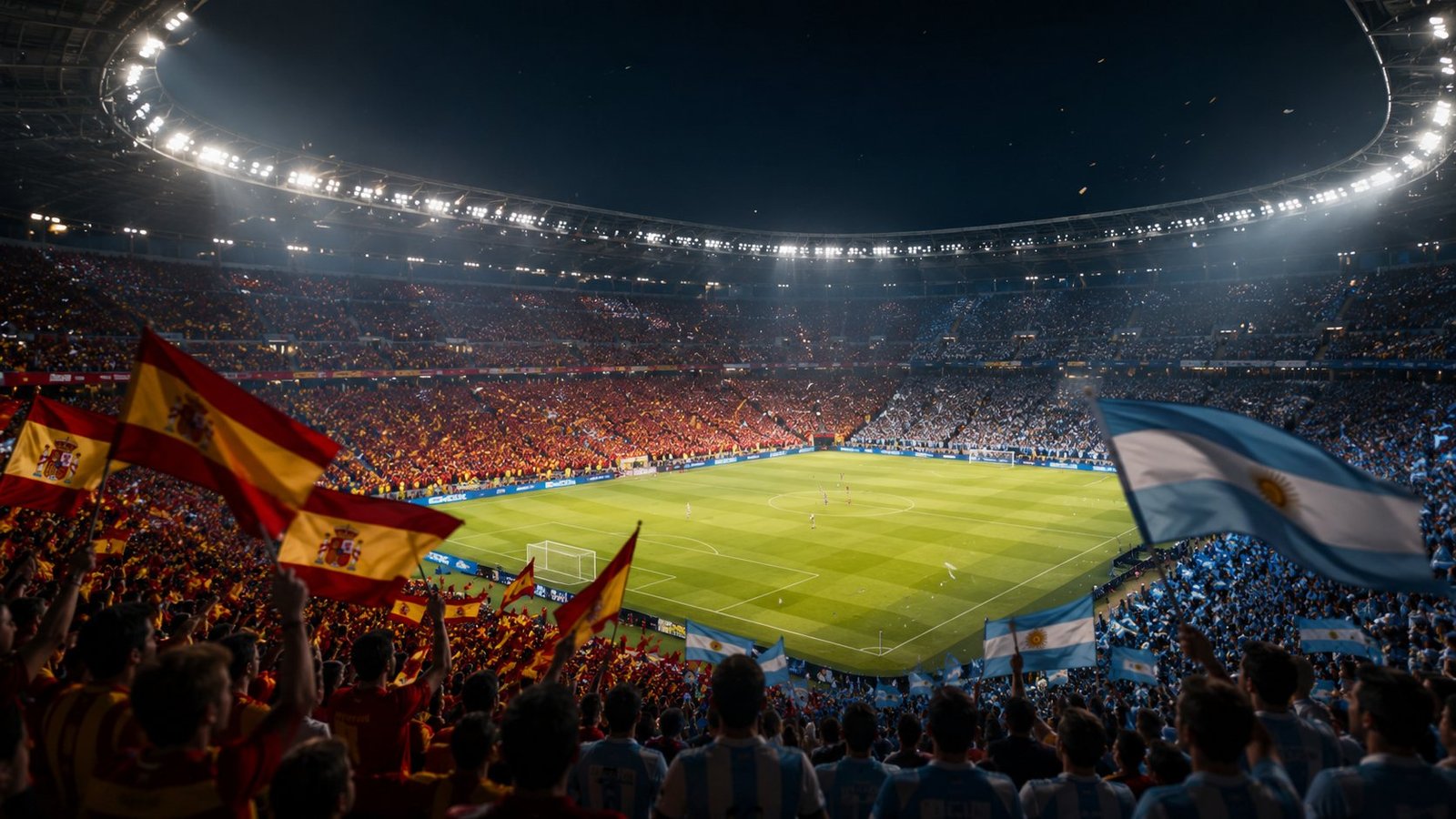
Spain are world champions again. Spain defeated Argentina 1-0 in the 2026 FIFA World Cup final at New York New Jersey Stadium, with Ferran Torres scoring the decisive goal in extra time. The victory gives Spain their second men’s World Cup title after 2010. Spain also completed the tournament with only one goal conceded and became the first country to hold the men’s and women’s World Cup titles at the same time.
Spain are back on top of world football.
Spain defeated Argentina 1-0 in the 2026 FIFA World Cup final at New York New Jersey Stadium to win their second men’s World Cup title.
FIFA, the Fédération Internationale de Football Association, is the international governing body responsible for organising the World Cup, maintaining official fixtures and recording official tournament results.
The final ended goalless after 90 minutes. The match was decided in extra time.
Ferran Torres scored the only goal of the game in the 106th minute. The substitute found the breakthrough that Spain had been searching for and gave his team a 1-0 lead.
Argentina could not respond. Spain managed the remaining minutes with control and defensive discipline, closing out one of the most important victories in the country’s football history.
Spain win their second World Cup title
This is Spain’s second men’s World Cup title.
Their first came in 2010, when Spain defeated the Netherlands in South Africa. Sixteen years later, Spain have returned to the summit of world football by defeating Argentina, the defending champions.
The victory also has wider historical meaning.
Spain won the Women’s World Cup in 2023. By winning the men’s World Cup in 2026, Spain became the first country to hold both the men’s and women’s World Cup titles at the same time.
It is a result that reflects the depth and strength of Spanish football across both the men’s and women’s game.
Ferran Torres decides the final
Ferran Torres was the decisive figure in the final.
He did not start the match, but he came on and changed it when Spain needed a breakthrough most.
For much of the game, Argentina defended with discipline and denied Spain clear shooting opportunities. Spain controlled long spells of possession, but they struggled to turn that control into a goal during normal time.
The pattern continued into extra time. Spain kept moving the ball, stretched Argentina’s defensive block and waited for the right moment.
That moment arrived in the 106th minute.
Torres’ goal became the defining moment of the final and the goal that delivered Spain’s second World Cup.
Argentina’s title defence ends
Argentina entered the final looking to defend the World Cup title they won in 2022.
They had been one of the most dangerous attacking teams of the tournament and reached the final with a perfect winning record.
But against Spain, Argentina found few clear paths through midfield and into the penalty area.
Spain’s pressure, compact defensive structure and control of possession limited Argentina’s attacking rhythm. Lionel Messi remained central to Argentina’s hopes, but Spain prevented him from dictating the game in the decisive areas.
Argentina pushed for an equaliser after falling behind in extra time, but Spain protected the lead and refused to allow the match to open up.
For Argentina, the defeat ended their attempt to become back-to-back world champions. For Spain, it was the moment they took the crown from the defending champions.
Spain’s defence built the title
Spain’s title was built on defensive control as much as attacking quality.
Across the entire tournament, Spain conceded only one goal.
They began the group stage with a 0-0 draw against Cape Verde, then beat Saudi Arabia 4-0 and Uruguay 1-0.
In the knockout stage, Spain defeated Austria 3-0, Portugal 1-0, Belgium 2-1, France 2-0 and Argentina 1-0.
The only goal Spain conceded came against Belgium in the quarter-final.
This defensive record was not based only on deep defending. Spain controlled matches with possession, but they also pressed quickly after losing the ball and kept the distance between midfield and defence compact.
Against Argentina, that structure was crucial.
Spain prevented Argentina from finding space between the lines and reduced the impact of quick transitions. When Argentina tried to accelerate the game, Spain slowed it down again.
Control mattered more than possession
Spanish football has long been associated with possession.
But this final was not only about keeping the ball. It was about control.
Spain did not attack recklessly. They moved the ball patiently, used the width of the pitch and tried to pull Argentina’s defensive structure out of shape.
During normal time, Argentina resisted.
Spain did not panic. They stayed with the same principles, used their bench and continued to search for the space that would decide the match.
The winning goal was the result of that patience.
Spain’s possession had a purpose. It controlled the rhythm, limited Argentina’s counters and eventually created the decisive opening.
Luis de la Fuente completes a historic cycle
Luis de la Fuente has now completed a historic period for Spanish football.
After leading Spain to the European Championship title in 2024, he has now guided the national team to the World Cup title in 2026.
At 65, De la Fuente became the oldest coach to win the men’s World Cup.
His Spain side combined experienced leaders with a new generation of attacking talent. The team did not depend on one player. It was built on structure, balance, pressing, technical quality and tactical discipline.
Players such as Rodri, Dani Olmo, Ferran Torres, Lamine Yamal and Nico Williams gave Spain different ways to control and change matches.
The final was another example of that collective strength. The decisive goal came from a substitute, but the victory came from the full team structure.
Lamine Yamal and Spain’s future
Lamine Yamal was one of the symbols of Spain’s new generation.
He did not score in the final, but his presence throughout the tournament helped shape Spain’s attacking identity.
Yamal gave Spain width on the right side, forced defenders to adjust their positions and created space for teammates in central areas.
His role was not only about individual dribbling. It was about how his movement changed the opposition’s defensive shape.
The final also showed Spain’s squad depth. Ferran Torres came from the bench and scored the winner. Other attacking options gave Spain energy and flexibility when the match entered extra time.
Spain’s victory was therefore not only about the present. It also showed the strength of the next generation.
Spain set a new standard
Spain’s 2010 World Cup victory was remembered for passing, patience and midfield control.
The 2026 version of Spain kept those qualities, but added more defensive balance, more directness and greater squad depth.
This team could dominate possession, but it could also suffer, defend and win tight matches.
That made the title more complete.
Spain were not perfect at the start of the tournament. They opened with a 0-0 draw against Cape Verde. But from that point onward, they improved with each round.
They beat Austria, Portugal, Belgium, France and Argentina in the knockout stage.
The path was difficult, but Spain adapted to every opponent.
Spain return to the top of world football
The 2026 World Cup final confirmed Spain’s return to the top of world football.
Spain finished the tournament unbeaten, with seven wins and one draw. They scored 14 goals and conceded only one.
The final was decided by Ferran Torres, but the title was built by the whole team.
Midfield control, defensive compactness, pressing, wide attacking play and the use of substitutes all contributed to the result.
Spain are world champions again.
This was not simply a repeat of 2010. It was a new title won by a new generation, under a coach who has reshaped Spain into the most complete national team in world football.