
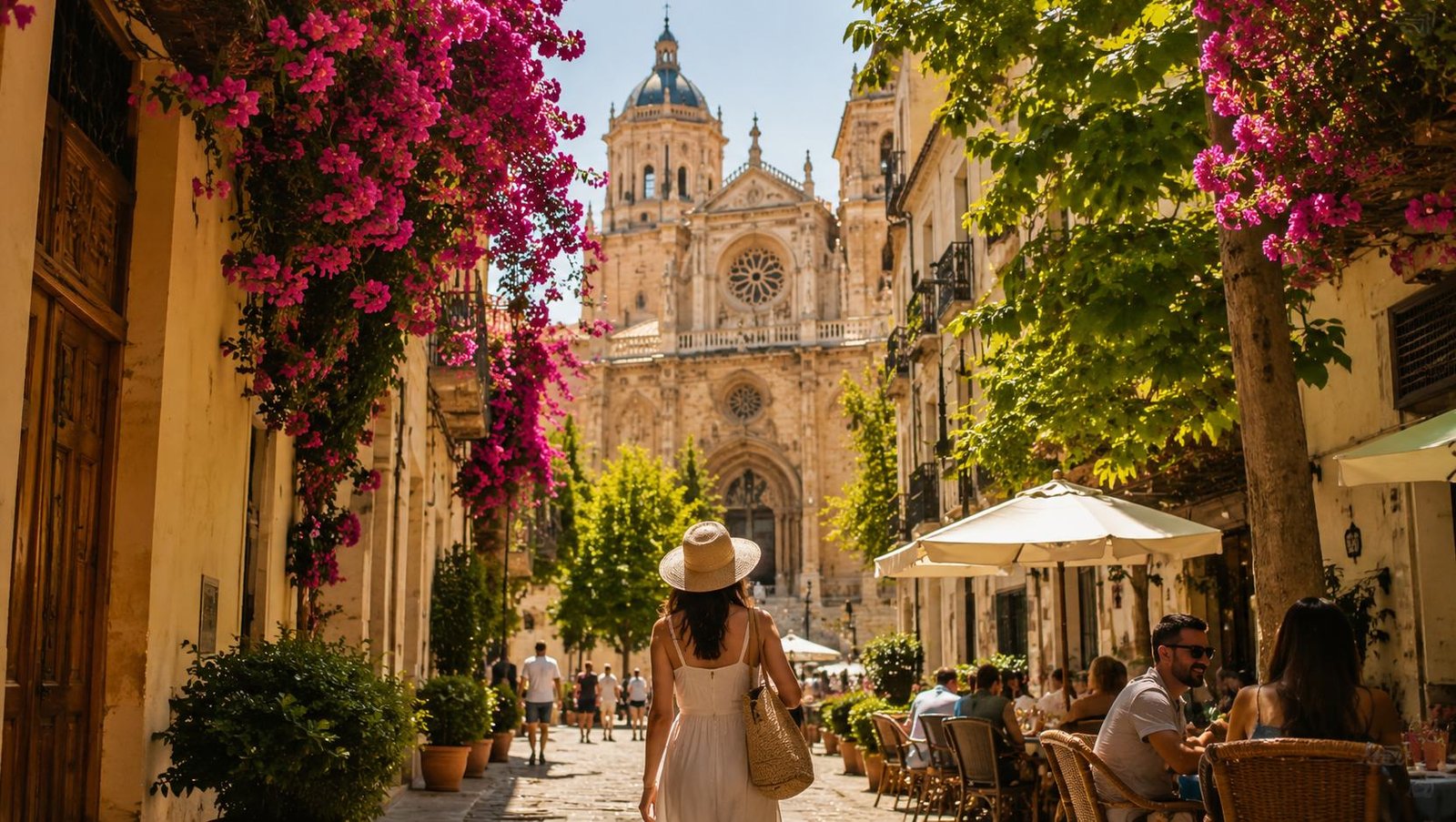
Spain expects around 43 million international tourists to visit the country between June and September 2026, an increase of 6% from the same period in 2025. Their total spending is projected to reach approximately €64 billion, up 10%. Official statistics show that Spain received 10.3 million international tourists in May alone, while their spending reached €13.553 billion.
Spain’s summer tourism market is expected to continue expanding in 2026, supported by growth in both international visitor numbers and tourist expenditure.
Turespaña, the Spanish Tourism Institute under the Ministry of Industry and Tourism, projects that around 43 million international tourists will visit Spain between June and September 2026.
This represents an increase of approximately 6% compared with the same period in 2025.
International tourists are expected to spend close to €64 billion during the four-month period. The projected total is 10% higher than in the previous year, meaning that spending is expected to grow faster than visitor numbers.
The figures indicate that the amount spent by each visitor is continuing to increase. Accommodation, transport, food, cultural activities, and other tourism services are all likely to benefit from the higher level of expenditure.
Recent official statistics confirm the growth trend.
According to Spain’s National Statistics Institute, known as INE from its Spanish name Instituto Nacional de Estadística, Spain received 10.3 million international tourists in May 2026.
The number was 9.5% higher than in May 2025.
More than 36.8 million international tourists visited Spain during the first five months of 2026, representing annual growth of 5%.
Tourism expenditure increased even more strongly.
International tourists spent a total of €13.553 billion in Spain in May, an increase of 10.9% from the same month in 2025.
Average spending per tourist reached €1,321, while average daily expenditure increased to €214.
During the first five months of 2026, international tourists spent a combined €50.257 billion in Spain. This was 7.8% more than during the same period of 2025.
The faster growth of expenditure compared with visitor numbers has become an important indicator for Spanish tourism policy. Spain is seeking to increase not only the number of visitors but also the quality of stays, regional distribution of spending, cultural participation, and environmental sustainability.
International transport not included in package tours was the largest spending category in May, accounting for 20.8% of total tourist expenditure.
Spending on activities represented 20.3% of the total, while accommodation accounted for 18%. Activity-related spending increased by 11.7%, and accommodation expenditure rose by 9.5%.
Accommodation patterns also changed.
The number of international tourists using hotels as their main form of accommodation increased by 5% in May. The number using rental homes rose by 26%, considerably faster than hotel accommodation.
The simultaneous increase in demand for hotels, tourist apartments, and short-term rental homes may raise accommodation prices and booking competition in major destinations during the summer peak season.
Madrid, Barcelona, Seville, Málaga, Valencia, and Palma de Mallorca are among the destinations likely to experience concentrated international demand.
July and August combine European holiday travel with long-haul tourism. Travelers planning to visit popular destinations may need to reserve hotels, trains, and major attractions well in advance.
The increase in international tourism does not create the same economic effects in every location. When demand is concentrated in a limited number of cities and coastal areas, it can also contribute to higher accommodation prices, transport congestion, limited attraction availability, and pressure on local housing.
Spain’s national and regional authorities are seeking to preserve the economic benefits of tourism while improving regional distribution, reducing environmental pressure, and protecting residents’ living conditions.
For travelers, the practical conditions of the trip may be more important than the total number of visitors. During the peak season, accommodation location, air conditioning, public transport access, cancellation conditions, and attraction availability should all be checked before booking.
Travel plans should also take regional weather conditions into account. High summer temperatures can affect outdoor sightseeing, particularly in southern and inland areas of Spain.
If the official forecast is realized, Spain will receive approximately 43 million international tourists and generate close to €64 billion in international tourism expenditure between June and September 2026.
Travelers should prepare for stronger demand by booking accommodation and transport early and checking local weather, attraction schedules, and reservation requirements before departure.